

Hey there! As a supplier of Trailer Hub Oil Seals, I've seen firsthand the differences between seals for light - duty and heavy - duty trailers. In this blog, I'm gonna break down these differences to help you understand which type of seal is right for your needs.
1. Usage and Application
Light - duty trailers are typically used for less strenuous tasks. They're often pulled by passenger vehicles and are used for things like hauling small loads, such as garden equipment, small boats, or a couple of ATVs. These trailers usually don't carry a huge amount of weight, and their usage is often limited to short - distance trips on well - maintained roads.

On the other hand, heavy - duty trailers are the workhorses of the trailer world. They're used for transporting large and heavy loads, like construction materials, industrial equipment, or even other vehicles. Heavy - duty trailers are often used for long - distance hauls and may have to navigate rough terrains, including unpaved roads and construction sites.
2. Design and Construction
Material
For light - duty trailer hub oil seals, the materials used are generally less robust. They're often made from standard rubber compounds that offer basic protection against dirt, water, and grease leakage. These seals are designed to handle the relatively low stress and wear associated with light - duty use.
Heavy - duty trailer hub oil seals, however, require more durable materials. They're commonly made from high - performance rubber compounds or even synthetic materials like nitrile rubber (NBR) or fluorocarbon rubber (FKM). These materials can withstand higher temperatures, greater pressure, and more abrasive conditions. For example, NBR has excellent resistance to oil and fuel, making it ideal for heavy - duty applications where there may be more exposure to these substances.
Structure
Light - duty seals usually have a simpler design. They typically consist of a single lip or a basic multi - lip design. The single - lip design is cost - effective and sufficient for preventing minor contaminants from entering the hub and keeping the lubricating oil inside.
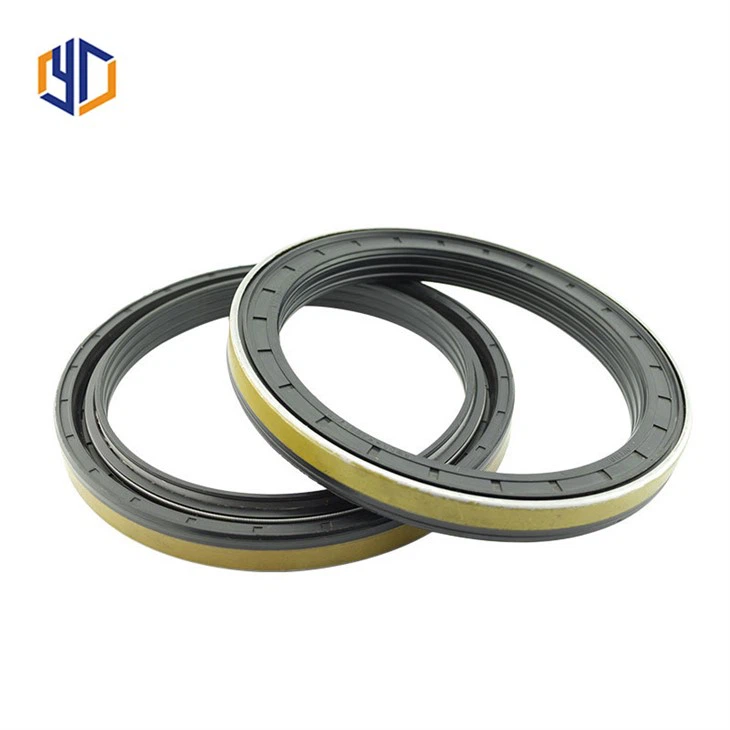
Heavy - duty seals, in contrast, have a more complex structure. They often feature multiple lips with different functions. For instance, there may be a primary lip that provides the main seal against oil leakage and secondary lips that act as barriers against dirt and water. Some heavy - duty seals also have additional features like a dust excluder or a spring - loaded lip to ensure a tight seal even under high - pressure conditions.
3. Performance Requirements
Pressure Resistance
Light - duty trailers don't generate a lot of pressure in the hub area. The rotational speed of the wheels is relatively low, and the weight of the load is not excessive. As a result, light - duty hub oil seals only need to withstand low to moderate pressure.
Heavy - duty trailers, due to their large loads and high - speed operation on long hauls, generate much higher pressure in the hub. The seals need to be able to withstand these high pressures without leaking. A heavy - duty seal might be designed to handle pressures several times higher than that of a light - duty seal.
Temperature Resistance
Light - duty trailers usually operate in normal temperature conditions. They're not exposed to extreme heat or cold for extended periods. So, the hub oil seals for light - duty trailers only need to function well within a relatively narrow temperature range.
Heavy - duty trailers, especially those used in industrial or long - distance transportation, can experience a wide range of temperatures. They may operate in hot desert conditions or cold winter climates. Heavy - duty hub oil seals are engineered to maintain their sealing properties over a much broader temperature range. For example, they can remain flexible and effective in temperatures from - 40°F to 250°F (- 40°C to 121°C).
Wear and Tear Resistance
Light - duty trailers generally have less wear and tear on their hub components. The wheels don't rotate as fast or carry as much weight, so the seals are subject to less friction and abrasion.
Heavy - duty trailers, with their heavy loads and long - distance travel, put a lot of stress on the hub oil seals. The seals need to be highly resistant to wear and tear. They're designed to last longer and maintain their sealing performance even after thousands of miles of use.
4. Cost
Light - duty trailer hub oil seals are usually more affordable. Since they use less expensive materials and have a simpler design, the manufacturing cost is lower. This makes them a cost - effective choice for those who only need a seal for light - duty applications.
Heavy - duty trailer hub oil seals, on the other hand, are more expensive. The high - performance materials, complex design, and advanced manufacturing processes all contribute to the higher cost. However, considering the long - term durability and reliability they offer in heavy - duty applications, the higher cost is often justified.
5. Compatibility
When it comes to compatibility, it's crucial to choose the right seal for your trailer. Light - duty seals are designed to fit the hubs of light - duty trailers. They're sized and shaped to match the specific dimensions and requirements of these trailers.
Heavy - duty seals are made to fit heavy - duty trailer hubs. They're often larger in size and have different mounting configurations to accommodate the larger and more robust hub assemblies of heavy - duty trailers. Using the wrong type of seal can lead to poor sealing performance, premature failure, and potential damage to the trailer's hub and bearings.
Conclusion
In summary, the differences between trailer hub oil seals for light - duty and heavy - duty trailers are significant. From the materials and design to the performance requirements and cost, each type of seal is tailored to meet the specific needs of its respective trailer application.
If you're looking for a Wheel Hub Oil Seal for your light - duty trailer, a standard, cost - effective seal will likely do the job. But if you have a heavy - duty trailer, investing in a high - quality Trailer Hub Oil Seal is essential to ensure the long - term reliability and performance of your trailer. And for those with Toyota vehicles, we also offer Hub Seals for Toyota Vehicles.
If you're in the market for trailer hub oil seals and need help choosing the right one for your trailer, don't hesitate to reach out. We're here to assist you in making the best decision for your specific needs. Whether it's a light - duty or heavy - duty trailer, we've got the expertise and the products to keep your trailer running smoothly.
References
- "Handbook of Seal Technology" by John H. Birk.
- Industry reports on trailer component manufacturing and performance.