

Hey there! As a supplier of automotive plastic clips, I often get asked if these clips can be customized. The short answer is yes, they absolutely can! In this blog post, I'll dive into the world of customized automotive plastic clips, sharing why customization is a great option, the process involved, and some real - world examples of customized clips.
Why Customize Automotive Plastic Clips?
First off, let's talk about why anyone would want to customize automotive plastic clips. There are several reasons. For one, different vehicles have unique requirements. Every car model has its own design, and sometimes the standard clips just won't cut it. A custom - made clip can ensure a perfect fit, which is crucial for the proper functioning of various automotive parts.

Another reason is performance. Custom clips can be engineered to meet specific performance criteria. Maybe you need a clip that can withstand high temperatures, or one that has a certain level of flexibility. By customizing, you can get a clip that's tailored to your exact needs.
Cost - effectiveness is also a factor. In some cases, using a custom clip can actually save money in the long run. Instead of trying to make a standard clip work in a non - standard situation, a custom clip can be designed to be more efficient, reducing the risk of part failure and the need for frequent replacements.
The Customization Process
Now, let's get into how the customization process works. It all starts with a conversation. When a customer comes to us with a need for a custom automotive plastic clip, we sit down and have a detailed chat. They tell us about their specific requirements, such as the size, shape, material, and performance characteristics they need.
We then use advanced design software to create a 3D model of the proposed clip. This allows the customer to visualize the final product and make any necessary adjustments. Once the design is finalized, we move on to the prototyping stage. We use state - of - the - art manufacturing techniques to create a physical prototype of the clip. This prototype is then tested to ensure it meets all the specified requirements.
If the prototype passes the tests, we start the production process. We use high - quality plastic materials that are chosen based on the clip's intended use. The manufacturing process is closely monitored to ensure consistency and quality control.
Real - World Examples of Customized Clips
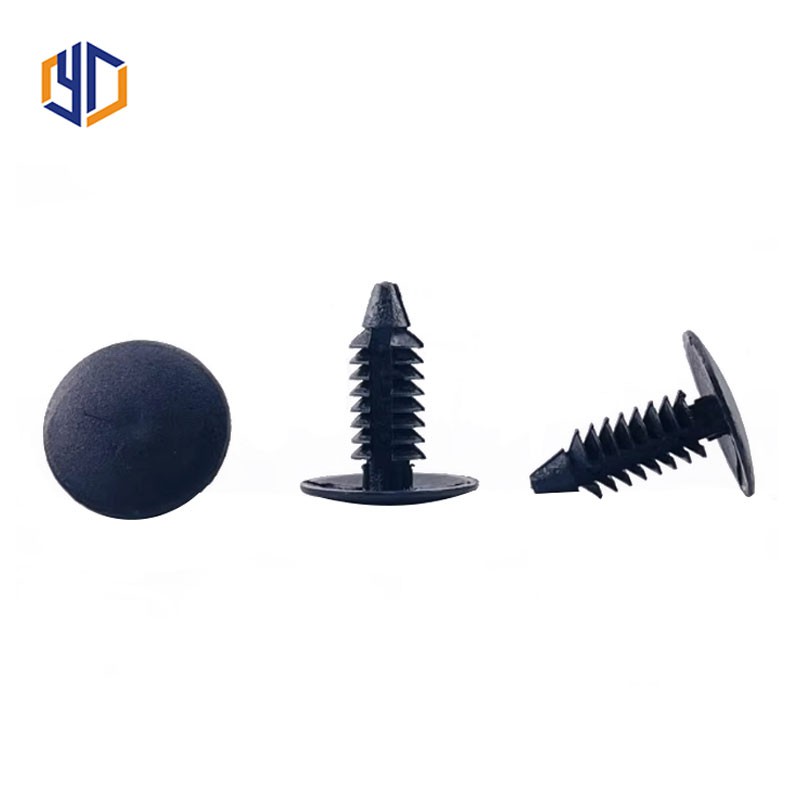
Let me give you some real - world examples of customized automotive plastic clips. One common type is the Christmas Tree Nylon Clip. These clips are often used for interior trim applications. A customer might come to us and ask for a Christmas Tree Nylon Clip with a specific length and diameter to fit a particular vehicle model. We can customize the clip to their exact specifications, ensuring a snug fit and easy installation.
Another example is the Front License Plate Holes Cover Plastic Clip. Some vehicles have unique license plate hole configurations, and a standard clip won't cover the holes properly. We can design a custom clip that fits the specific hole pattern of the vehicle, providing a clean and professional look.
The Bumper Door Trim Panel Fastener Clip is also a popular candidate for customization. Bumpers and door trim panels come in all shapes and sizes, and a custom fastener clip can ensure a secure attachment. We can customize the clip's shape, strength, and flexibility to meet the specific requirements of the panel and the vehicle.
Material Selection for Custom Clips
The choice of material is a crucial part of the customization process. Different plastics have different properties, and we need to select the right one for the job. For example, nylon is a popular choice because it's strong, durable, and has good resistance to wear and tear. It's also relatively lightweight, which is important in the automotive industry where weight reduction can improve fuel efficiency.
Polypropylene is another commonly used material. It's cost - effective, easy to mold, and has good chemical resistance. If a clip needs to be flexible, we might choose a thermoplastic elastomer (TPE). TPEs combine the properties of rubber and plastic, offering flexibility and resilience.
Quality Assurance
We take quality assurance very seriously. Every custom automotive plastic clip we produce goes through a rigorous testing process. We test for strength, durability, and performance under various conditions. We also conduct visual inspections to ensure the clips meet our high - quality standards.
We use advanced testing equipment to measure things like tensile strength, shear strength, and fatigue resistance. This allows us to ensure that the clips will perform as expected in real - world applications.
Environmental Considerations
In today's world, environmental considerations are also important. We strive to use environmentally friendly materials and manufacturing processes whenever possible. Many of the plastics we use are recyclable, and we are constantly looking for ways to reduce our carbon footprint.
Conclusion
So, to sum it up, automotive plastic clips can definitely be customized. Whether it's for a perfect fit, specific performance requirements, or cost - effectiveness, customization offers a lot of benefits. At our company, we have the expertise and the technology to create high - quality custom automotive plastic clips.
If you're in the market for custom automotive plastic clips, or if you have any questions about our products, don't hesitate to reach out. We'd love to have a chat and see how we can help you with your specific needs. Contact us today to start the customization process and get the perfect clips for your automotive applications.
References
- Automotive Plastics Handbook, Second Edition, Edited by G. Wypych
- Plastic Materials in Automotive Engineering, By M. Szycher