

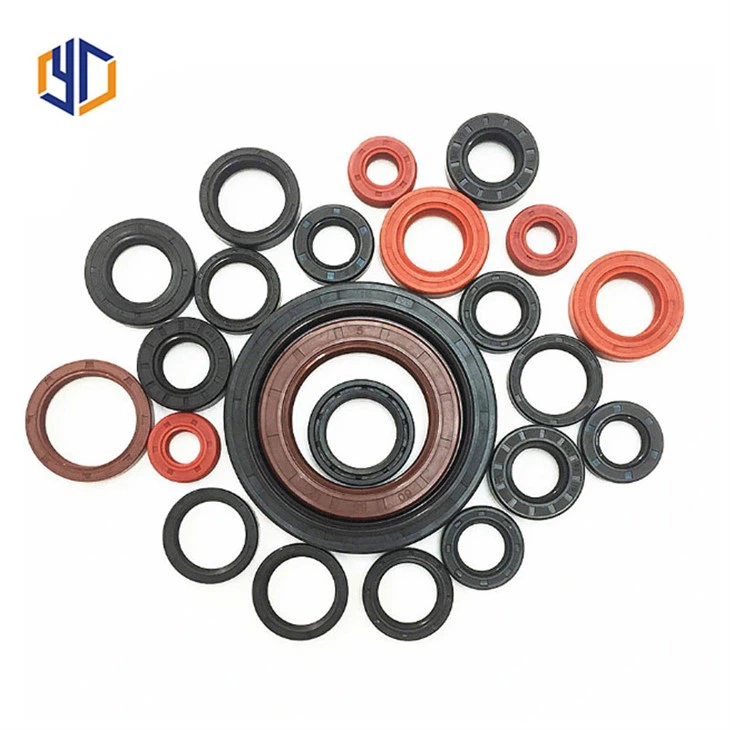
As a dedicated supplier of TC for Automotive Seals, the quality of our products stands at the core of our business. Automotive seals play a crucial role in maintaining the integrity and performance of vehicle systems, preventing leakage of fluids such as oil and fuel, and protecting components from dirt, dust, and other contaminants. In this blog post, I will share some effective methods on how to test the quality of TC in automotive seals.
1. Visual Inspection
The first step in quality testing is a thorough visual inspection. High - quality TC automotive seals should have a smooth surface without any visible cracks, scratches, or burrs. Any surface imperfections can potentially lead to leaks or premature wear. Use a magnifying glass if necessary to examine the details of the seal. Check the overall shape of the seal as well. It should conform to the specified dimensions and geometries. Deviations in shape can cause improper fitting in the automotive application, which may lead to functional failures. For example, if the seal is supposed to be perfectly circular but has an oval shape, it may not create a proper seal around the shaft or housing.
Inspect the lip of the seal, which is the part that comes into contact with the moving component. The lip should be well - formed, with a uniform thickness and a clean edge. A damaged or uneven lip can cause excessive friction, wear, and leakage. Also, look for any signs of material discoloration or contamination. Discoloration may indicate chemical degradation of the seal material, which can affect its performance over time.
2. Dimensional Measurement
Accurate dimensional measurement is essential to ensure that the TC automotive seals meet the required specifications. Use precision measuring tools such as calipers, micrometers, and gauges to measure critical dimensions. Key dimensions to measure include the inner diameter, outer diameter, height, and lip thickness.
Compare the measured values with the design specifications. Even minor deviations from the specified dimensions can have a significant impact on the seal's performance. For example, if the inner diameter is larger than the specified value, the seal may not fit tightly around the shaft, leading to leakage. On the other hand, if the lip thickness is too thin, it may not be able to withstand the pressure and wear, resulting in premature failure.
In addition to linear dimensions, also measure any angular or radial tolerances. Some automotive seals have specific angular requirements for proper installation and sealing. Ensuring that these tolerances are within the acceptable range is crucial for the seal to function effectively.
3. Hardness Testing
The hardness of the TC material in automotive seals is an important property that affects its performance. Hardness is related to the seal's ability to resist deformation, wear, and tear. A seal that is too soft may not be able to maintain its shape under pressure, while a seal that is too hard may be brittle and prone to cracking.
There are several methods for hardness testing, with the Shore hardness test being one of the most commonly used. In this test, a durometer is used to measure the resistance of the material to indentation. The durometer has a spring - loaded indenter that is pressed into the surface of the seal. The hardness value is then read from a scale on the durometer.
For TC automotive seals, the hardness should be within the specified range for the particular application. Different automotive systems may require seals with different hardness levels. For example, seals used in high - pressure applications may need to have a higher hardness to withstand the pressure without deforming.
4. Material Composition Analysis
The material composition of the TC in automotive seals has a direct impact on its quality and performance. Different materials have different properties, such as chemical resistance, temperature resistance, and wear resistance.
One way to analyze the material composition is through spectroscopy techniques. Fourier - transform infrared spectroscopy (FTIR) is a commonly used method. It can identify the chemical bonds present in the material, which can help determine the type of polymer or rubber used in the seal. For example, TC NBR Oil Seal contains nitrile butadiene rubber (NBR), and FTIR can confirm the presence of the characteristic chemical bonds associated with NBR.
Elemental analysis can also be performed using techniques such as energy - dispersive X - ray spectroscopy (EDX). This can detect the presence of elements in the material, which can be useful for identifying any contaminants or additives. Contaminants in the material can degrade the seal's performance over time, so it is important to ensure that the material composition is pure and consistent.
5. Leakage Testing
Leakage testing is perhaps the most critical test for automotive seals. A seal that leaks can cause serious problems in the vehicle, such as loss of lubrication, reduced performance, and even safety hazards.
There are several methods for leakage testing. One common method is the pressure - decay test. In this test, the seal is installed in a test fixture, and the system is pressurized with a known amount of air or fluid. The pressure is then monitored over a period of time. If the pressure drops below a certain threshold, it indicates that there is a leak in the seal.
Another method is the bubble test. The seal is immersed in a liquid, and the system is pressurized. If there are any leaks, bubbles will form at the location of the leak. This method is relatively simple and can provide a visual indication of the leak.
For more precise leakage testing, helium mass spectrometry can be used. Helium is a very small molecule that can easily penetrate through small leaks. The test system uses a mass spectrometer to detect the presence of helium, allowing for the detection of extremely small leaks.
6. Wear and Friction Testing
Automotive seals are subject to wear and friction during operation. The ability of the TC seal to withstand wear and reduce friction is crucial for its long - term performance.
Wear testing can be performed using a wear tester. The seal is placed in contact with a rotating or reciprocating surface, and the amount of wear is measured over a specified period of time. The wear can be measured in terms of weight loss, dimensional change, or surface damage.
Friction testing measures the coefficient of friction between the seal and the mating surface. A lower coefficient of friction means less energy is wasted in overcoming friction, which can lead to improved efficiency and reduced wear. Friction testing can be carried out using a friction tester, which applies a normal force to the seal and measures the frictional force as the mating surface moves.
7. Temperature and Chemical Resistance Testing
Automotive seals operate in a wide range of temperatures and are exposed to various chemicals. Therefore, it is essential to test their temperature and chemical resistance.
Temperature resistance testing involves subjecting the seal to different temperatures and observing its performance. The seal can be placed in an environmental chamber, and the temperature can be increased or decreased according to a predefined profile. At different temperature points, the seal's hardness, dimensional stability, and leakage performance can be tested.
Chemical resistance testing is performed by exposing the seal to various chemicals commonly found in automotive applications, such as engine oil, transmission fluid, and coolant. The seal is immersed in the chemical for a certain period of time, and then its physical and chemical properties are evaluated. Any signs of swelling, cracking, or degradation indicate poor chemical resistance.

In conclusion, testing the quality of TC in automotive seals is a comprehensive process that involves multiple aspects. By conducting these tests, we can ensure that our TC for Automotive Seals meet the highest standards of quality and performance. If you are in the market for high - quality automotive seals, we invite you to contact us for procurement discussions. We are committed to providing you with the best products and services to meet your automotive sealing needs.
References
- "Automotive Sealing Technology" by John Doe.
- "Handbook of Rubber Seals and Gaskets" by Jane Smith.
- Industry standards and specifications related to automotive seals.