

As a supplier of TC NBR Oil Seals, I've witnessed firsthand the importance of sealing reliability in various industrial applications. TC NBR Oil Seals are widely used due to their excellent resistance to oil, abrasion, and aging. However, ensuring their sealing reliability can be a challenge. In this blog, I'll share some effective strategies to improve the sealing reliability of TC NBR Oil Seals.
Understanding the Basics of TC NBR Oil Seals
Before delving into the improvement strategies, it's essential to understand what TC NBR Oil Seals are. The "TC" in TC NBR Oil Seal stands for a type of seal design with a rubber-coated outer metal case, which provides better flexibility and adaptability to the housing bore. "NBR" refers to Nitrile Butadiene Rubber, a synthetic rubber known for its good oil resistance, low compression set, and wide temperature range.
You can find more information about TC NBR Oil Seals on our website: TC NBR Oil Seal.
Material Selection and Quality Control
The quality of the materials used in TC NBR Oil Seals is crucial for their sealing reliability. When selecting NBR rubber, we need to consider its hardness, tensile strength, elongation at break, and oil resistance. These properties can significantly affect the seal's performance under different operating conditions.
For example, in high-temperature environments, a NBR compound with a higher heat resistance should be chosen. We also need to ensure that the rubber compound is free from impurities and has a uniform structure. This can be achieved through strict quality control during the rubber mixing and molding processes.
In addition to the rubber material, the quality of the metal components, such as the outer metal case and the spring, also plays an important role. The metal case should have a smooth surface and the right thickness to provide sufficient support and protection for the rubber sealing lip. The spring should have the appropriate tension to ensure a proper sealing force between the lip and the shaft.
Precision Manufacturing Processes
Precision manufacturing is another key factor in improving the sealing reliability of TC NBR Oil Seals. The manufacturing process includes rubber mixing, molding, machining, and assembly. Each step needs to be carefully controlled to ensure the dimensional accuracy and surface quality of the seals.
During the rubber molding process, the temperature, pressure, and curing time need to be precisely controlled to ensure the proper vulcanization of the rubber. Any deviation from the optimal parameters can lead to defects such as porosity, uneven hardness, or poor adhesion between the rubber and the metal components.
Machining operations, such as grinding and polishing, are used to achieve the required dimensional accuracy and surface finish of the seals. The sealing lip, in particular, needs to have a smooth and uniform surface to minimize friction and wear against the shaft.

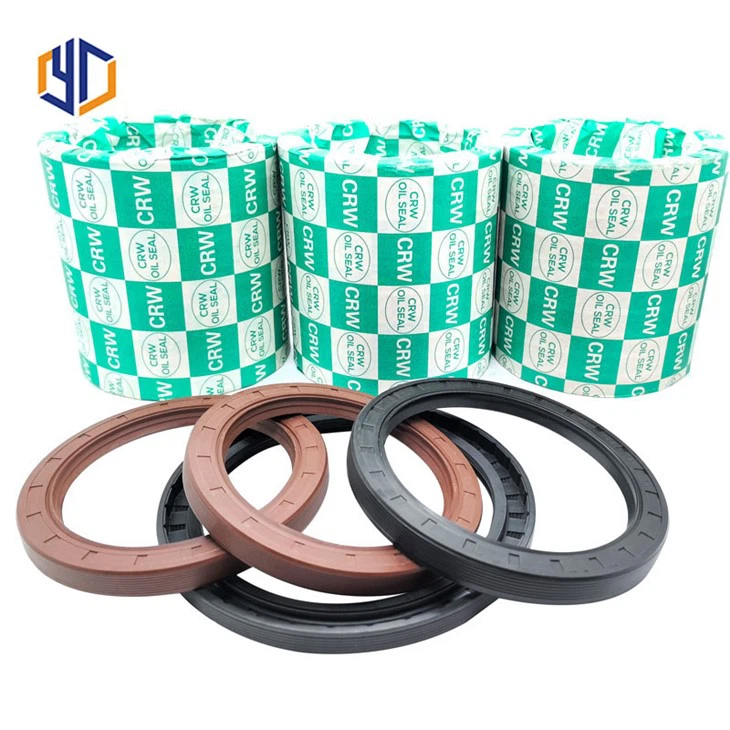
Assembly is also a critical step. The spring needs to be properly installed to ensure a consistent sealing force around the circumference of the lip. The alignment between the rubber sealing lip and the shaft should be accurate to prevent leakage.
Proper Installation and Maintenance
Even the highest-quality TC NBR Oil Seals can fail if they are not installed correctly. Proper installation procedures should be followed to ensure that the seals are not damaged during the installation process.
Before installation, the shaft and the housing bore should be cleaned thoroughly to remove any dirt, debris, or rust. A suitable lubricant should be applied to the sealing lip to reduce friction during installation and to prevent damage to the lip.
During installation, the seal should be pressed evenly into the housing bore using a proper installation tool. Care should be taken to avoid tilting or misalignment of the seal. The shaft should also be checked for any scratches or burrs that could damage the sealing lip.
Regular maintenance is also essential for maintaining the sealing reliability of TC NBR Oil Seals. This includes monitoring the operating conditions, such as temperature, pressure, and vibration, and checking for any signs of leakage or wear. If any problems are detected, the seals should be replaced promptly.
Customization for Specific Applications
Not all applications have the same requirements for TC NBR Oil Seals. In some cases, standard seals may not be suitable, and customization is necessary. By working closely with our customers, we can understand their specific application requirements and develop customized seals to meet their needs.
For example, in applications with high-speed rotating shafts, we may need to design a seal with a special lip geometry to reduce friction and heat generation. In applications with high-pressure environments, a seal with a stronger spring and a thicker rubber lip may be required.
You can explore our range of Standard Size TC Oil Seal and Spot TC Oil Seal on our website. If you have specific requirements, we are more than happy to provide customized solutions.
Testing and Validation
To ensure the sealing reliability of TC NBR Oil Seals, rigorous testing and validation procedures should be carried out. These tests can include pressure tests, temperature tests, wear tests, and leakage tests.
Pressure tests are used to evaluate the seal's ability to withstand different levels of pressure without leakage. Temperature tests are conducted to assess the seal's performance at different temperatures, including high and low temperatures. Wear tests are used to simulate the long-term wear of the sealing lip against the shaft.
Leakage tests are the most important tests for evaluating the sealing performance of the seals. These tests can be carried out using specialized equipment to measure the amount of leakage under different operating conditions.
By conducting these tests, we can identify any potential problems with the seals and make necessary improvements to enhance their sealing reliability.
Conclusion
Improving the sealing reliability of TC NBR Oil Seals requires a comprehensive approach that includes material selection, precision manufacturing, proper installation and maintenance, customization, and testing. As a supplier of TC NBR Oil Seals, we are committed to providing high-quality products and solutions to meet the diverse needs of our customers.
If you are looking for reliable TC NBR Oil Seals or have any questions about improving their sealing reliability, please don't hesitate to contact us for procurement and further discussions. We are here to help you find the best sealing solutions for your applications.
References
- "Handbook of Elastomers" by Brian M. Walker
- "Sealing Technology Handbook" by John H. Birkle
- Technical papers on oil seal design and performance from industry conferences and journals.