

What is the tensile strength of EPDM rubber strip? Well, that's a question I get asked a lot as a supplier of EPDM Rubber Strips. In this blog, I'm gonna break down what tensile strength means for EPDM rubber strips, why it matters, and how it affects the performance of these strips in various applications.
First off, let's talk about what tensile strength is. Tensile strength is basically the maximum amount of pulling force a material can handle before it breaks. For EPDM rubber strips, it's a crucial property because these strips are often used in situations where they'll be stretched, pulled, or otherwise subjected to tension.
EPDM, or ethylene propylene diene monomer, is a synthetic rubber known for its excellent weather resistance, ozone resistance, and low - temperature flexibility. These properties make EPDM rubber strips a popular choice in a wide range of industries, from automotive to construction.

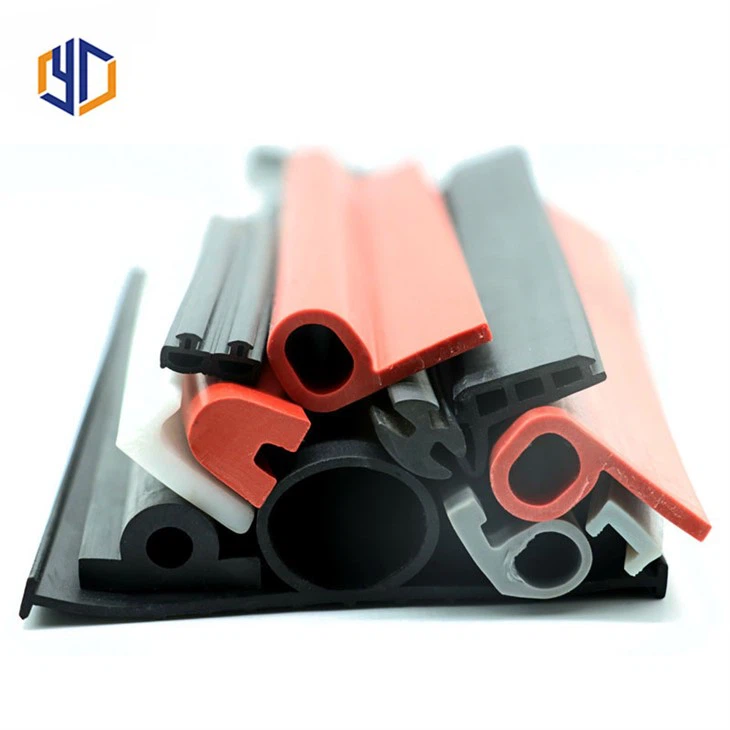
In the automotive industry, EPDM rubber strips are used for various purposes. You've got Rubber Strip for Car Door, which helps to keep out water, dust, and noise. They're constantly being opened and closed, so they need to have good tensile strength to withstand the repeated stretching and pulling. Car Window Rubber Strip is another example. When you roll the windows up and down, the rubber strip gets stretched. If its tensile strength is too low, it might tear or break over time, leading to leaks and other issues. And then there's the Car Windshield Rubber Strip. This strip has to hold the windshield in place and also seal it properly. It needs to be strong enough to handle the vibrations and movements of the car without failing.
In construction, EPDM rubber strips are used for sealing joints in buildings. They're exposed to all kinds of weather conditions, from extreme heat to freezing cold. The tensile strength of these strips ensures that they can maintain their integrity and continue to provide an effective seal even when they're being pulled or stretched due to the expansion and contraction of the building materials.
Now, how is the tensile strength of EPDM rubber strips measured? Usually, it's measured in pounds per square inch (psi) or megapascals (MPa). The testing process involves taking a sample of the rubber strip and pulling it at a constant rate until it breaks. The maximum force applied during this process is recorded as the tensile strength.
The tensile strength of EPDM rubber strips can vary depending on several factors. One of the main factors is the formulation of the rubber. Different manufacturers use different recipes to make EPDM rubber, and these formulations can have a big impact on the final properties of the rubber strip. For example, adding certain fillers or additives can increase the tensile strength.
The manufacturing process also plays a role. How the rubber is mixed, molded, and cured can affect its internal structure and, in turn, its tensile strength. A well - controlled manufacturing process is essential for producing EPDM rubber strips with consistent and high - quality tensile strength.
Another factor is the thickness of the rubber strip. Generally speaking, thicker strips tend to have higher tensile strength than thinner ones. But it's not just about the thickness; the cross - sectional shape of the strip can also matter. Some shapes might distribute the stress more evenly when the strip is being pulled, which can improve its overall performance.
So, what's a good tensile strength for EPDM rubber strips? Well, it depends on the specific application. For automotive applications, a tensile strength of around 1000 - 2000 psi (6.9 - 13.8 MPa) is often considered good. This range provides enough strength to handle the normal wear and tear in a car environment. In construction, the requirements might be different. For some heavy - duty sealing applications, a higher tensile strength might be needed, maybe in the range of 2000 - 3000 psi (13.8 - 20.7 MPa).
As a supplier of EPDM rubber strips, I understand the importance of providing products with the right tensile strength. That's why we have a strict quality control process in place. We test every batch of our rubber strips to make sure they meet the required standards. We also work closely with our customers to understand their specific needs and recommend the best products for their applications.
If you're in the market for EPDM rubber strips, it's important to ask about the tensile strength. Don't just assume that all EPDM rubber strips are the same. Different suppliers might offer products with different tensile strengths, and choosing the right one can make a big difference in the performance and longevity of your project.
Whether you're in the automotive industry looking for Rubber Strip for Car Door, Car Window Rubber Strip, or Car Windshield Rubber Strip, or in the construction industry needing high - quality sealing strips, I'm here to help. If you have any questions or want to discuss your specific requirements, feel free to reach out. We can work together to find the perfect EPDM rubber strips for your needs. Let's start a conversation and see how we can make your project a success.
References
- "Rubber Technology Handbook" by Werner Hofmann
- "The Science and Technology of Rubber" edited by James E. Mark, Burak Erman, and Charles L. Roth