

When it comes to rubber products, resilience is a crucial characteristic that determines their performance in various applications. As a supplier of EPDM rubber strips, I often get asked whether EPDM rubber strips have good resilience. In this blog post, I'll delve into the science behind EPDM rubber, explore its resilience properties, and discuss its implications for different applications.
Understanding EPDM Rubber
EPDM, or ethylene propylene diene monomer, is a synthetic rubber known for its excellent weather resistance, heat resistance, and electrical insulation properties. It is made from a copolymer of ethylene and propylene, with a small amount of a diene monomer added to introduce cross-linking sites. This cross-linking structure gives EPDM rubber its unique properties, including its resilience.
The Science of Resilience in EPDM Rubber
Resilience is the ability of a material to return to its original shape after being deformed. In the case of EPDM rubber, its resilience is due to the cross-linked polymer network within the material. When a force is applied to the EPDM rubber strip, the polymer chains stretch and deform. However, the cross-links between the chains act like springs, pulling the chains back to their original positions once the force is removed.
This elastic behavior is governed by the principles of polymer physics. The cross-links in EPDM rubber create a three-dimensional network that can store and release energy. When the rubber is deformed, energy is stored in the stretched polymer chains. When the deformation is removed, this stored energy is released, causing the rubber to bounce back to its original shape.
Measuring the Resilience of EPDM Rubber Strips
The resilience of EPDM rubber strips can be measured using a variety of methods, with the most common being the rebound resilience test. In this test, a small sample of the rubber strip is dropped onto a hard surface from a fixed height. The height to which the rubber rebounds is then measured, and the percentage of the original height is calculated. A higher rebound percentage indicates better resilience.
Typically, EPDM rubber strips have a rebound resilience of around 40 - 60%. This is considered to be quite good compared to many other types of rubber, which makes EPDM rubber an excellent choice for applications where resilience is important.
Applications of EPDM Rubber Strips Based on Resilience
Automotive Sealing Applications
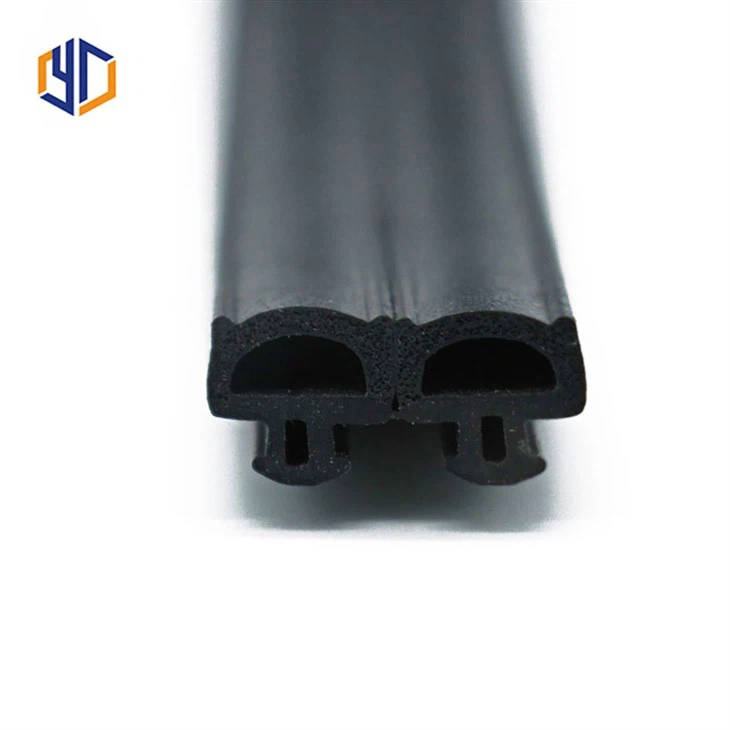
One of the most common applications of EPDM rubber strips is in automotive sealing. For example, Rubber Strip for Car Door and Car Window Rubber Strip need to have good resilience. When the car door is closed, the rubber strip is compressed, creating a seal that prevents water, air, and noise from entering the vehicle. The high resilience of EPDM rubber ensures that the strip returns to its original shape after the door is opened, maintaining a tight seal over time.
Building and Construction
In building and construction, EPDM rubber strips are used for sealing windows, doors, and expansion joints. The resilience of the rubber is essential for withstanding the movement and vibration of the building structure. For example, during temperature changes, buildings expand and contract. The EPDM rubber strip can absorb this movement due to its resilience, preventing water leakage and air infiltration.
Industrial Machinery
EPDM rubber strips are also used in industrial machinery for gasketing and sealing applications. They can withstand the pressure and vibration generated by the machinery, thanks to their good resilience. This helps to prevent the leakage of fluids and gases, ensuring the efficient operation of the machinery.
Factors Affecting the Resilience of EPDM Rubber Strips
While EPDM rubber generally has good resilience, there are several factors that can affect its performance.
Temperature
Temperature has a significant impact on the resilience of EPDM rubber. At low temperatures, the rubber becomes stiffer, and its resilience decreases. Conversely, at high temperatures, the rubber may become softer, and its mechanical properties, including resilience, can also be affected. However, EPDM rubber has a relatively wide temperature range within which it can maintain good resilience, typically from -40°C to 120°C.
Chemical Exposure
Exposure to certain chemicals can also affect the resilience of EPDM rubber. For example, oils, solvents, and strong acids or alkalis can cause the rubber to swell or degrade, reducing its resilience. However, EPDM rubber has good resistance to many common chemicals, which makes it suitable for a wide range of applications.
Aging
Over time, EPDM rubber can undergo aging due to factors such as heat, oxygen, and UV radiation. This aging process can cause the cross-links in the rubber to break down, resulting in a decrease in resilience. However, the addition of antioxidants and other stabilizers during the manufacturing process can help to slow down the aging process and maintain the resilience of the rubber over time.
Quality Assurance in EPDM Rubber Strip Production
As a supplier of EPDM Rubber Strip, we take quality assurance very seriously. We use high-quality raw materials and advanced manufacturing processes to ensure that our EPDM rubber strips have consistent and excellent resilience.
Our production process includes strict quality control measures at every stage, from raw material inspection to final product testing. We conduct regular rebound resilience tests and other performance tests to ensure that our products meet or exceed industry standards.
Conclusion
In conclusion, EPDM rubber strips do have good resilience, thanks to their unique cross-linked polymer structure. This property makes them suitable for a wide range of applications, including automotive sealing, building and construction, and industrial machinery. However, factors such as temperature, chemical exposure, and aging can affect their resilience. By using high-quality raw materials and implementing strict quality control measures, we can ensure that our EPDM rubber strips maintain good resilience over time.
If you are in the market for EPDM rubber strips and need products with excellent resilience for your applications, we would love to hear from you. Contact us to discuss your specific requirements and explore how our EPDM rubber strips can meet your needs.

References
- "Rubber Technology Handbook" by Werner Hofmann
- "Polymers: Structure and Bulk Properties" by John A. Manson and Leslie H. Sperling
- Technical literature from major EPDM rubber manufacturers