

Hey there, fellow car enthusiasts and industry folks! As a supplier of engine cover clips, one burning question I often get asked is: “Can engine cover clips withstand high temperatures?” Today, I'm gonna dig deep into this topic and share some insights based on my experience in the business.
First off, let's understand the environment where engine cover clips operate. The engine bay of a car is like a mini furnace. When the engine is running, it generates a huge amount of heat. Temperatures can soar anywhere from 100°C (212°F) under normal driving conditions to well over 200°C (392°F) during heavy use or in high-performance vehicles. That's some seriously hot stuff, and engine cover clips have to hold their ground in this sweltering environment.
Most engine cover clips are made from different materials, each with its own set of properties when it comes to heat resistance. Common materials include plastics like nylon and specialty polymers, as well as some metal alloys.
Nylon is a popular choice for many engine cover clips. It's lightweight, cost - effective, and has decent mechanical properties. But when it comes to high temperatures, nylon has its limits. Regular nylon starts to soften at around 150°C (302°F). As the temperature rises above this point, the clip loses its structural integrity. It becomes more pliable, and its ability to hold the engine cover firmly in place diminishes. This can lead to loose engine covers, which may cause rattling noises or even fall off while the vehicle is in motion.
However, there are high - performance nylons available that have been engineered to withstand higher temperatures. These reinforced nylons are often filled with glass fibers or other additives that enhance their heat resistance. They can typically handle temperatures up to 200°C (392°F) or slightly more, depending on the specific formulation.
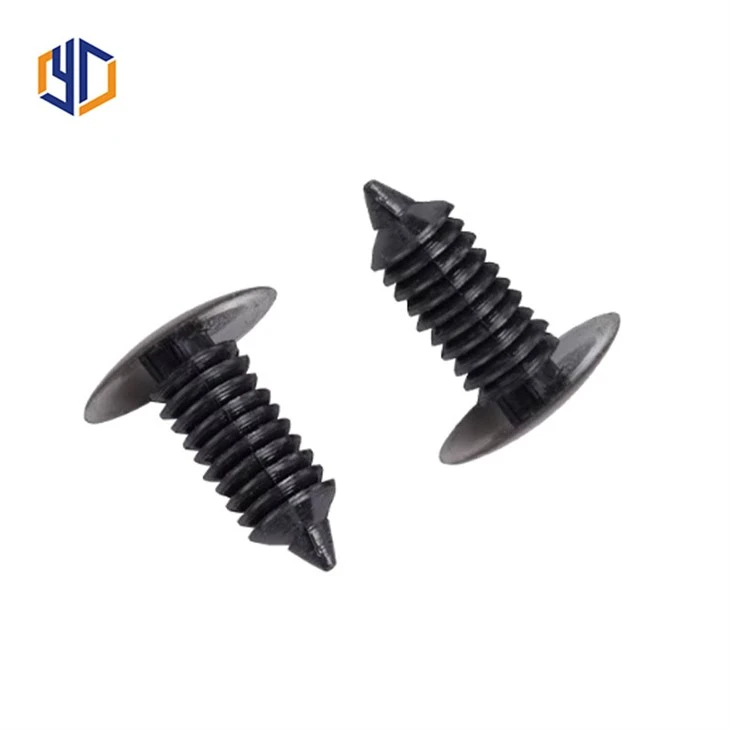
If you're in the market for high - quality nylon clips, you might want to check out our Christmas Tree Nylon Clip. These clips are designed with durability in mind and can stand up to a good amount of heat, making them a reliable choice for many engine cover applications.
Then there are specialty polymers. Some of these polymers are specifically developed for high - temperature applications. They have excellent heat resistance, often being able to withstand temperatures well above 250°C (482°F). Specialty polymers also offer good chemical resistance, which is important in the engine bay where there are various fluids and chemicals present. These clips are usually more expensive than nylon ones, but they provide better performance in extreme heat conditions.
On the other hand, metal clips are another option. Metals like steel and aluminum have high melting points. Steel can withstand temperatures up to 1370°C (2500°F), and aluminum starts to melt at around 660°C (1220°F). While it's extremely rare for an engine bay to reach these temperatures, metal clips offer unparalleled heat resistance. They are strong, durable, and don't lose their shape or strength as easily as plastic clips in high - temperature situations.
However, metal clips also have their drawbacks. They are heavier than plastic clips, which can add to the overall weight of the vehicle. Additionally, metal clips can corrode over time, especially if they are exposed to moisture and certain chemicals in the engine bay. This corrosion can weaken the clip and eventually lead to failure.
If you're looking for a different type of clip, we also offer Auto Fir Tree Clip Bumper Fastener. These fasteners are not only useful for bumpers but can also be used in some engine cover applications where a secure and reliable clip is needed.
The design of the engine cover clip also plays a crucial role in its ability to withstand high temperatures. A well - designed clip will distribute the stress evenly across its structure, reducing the chances of failure. For example, clips with a more complex shape or multiple contact points can better handle the thermal expansion and contraction that occurs as the engine heats up and cools down.

Another factor is the installation method. If a clip is not installed correctly, it may not be able to perform as expected, especially in high - temperature conditions. For instance, if a clip is over - tightened, it can cause stress concentrations that may lead to cracking or breaking when the clip expands due to heat. On the other hand, if it's under - tightened, it won't hold the engine cover securely, and the cover may come loose.
We also have Push - Type Retainer Car Clips. These clips are easy to install and can be a great option for engine cover applications. They are designed to provide a tight fit, ensuring that the engine cover stays in place even under high - temperature and high - vibration conditions.
When it comes to testing the heat resistance of engine cover clips, manufacturers use a variety of methods. One common test is the oven test, where clips are placed in an oven at a controlled high temperature for a specified period. After the test, the clips are inspected for any signs of deformation, cracking, or loss of strength. Another test is the thermal cycling test, which involves subjecting the clips to repeated cycles of heating and cooling to simulate real - world conditions.
In conclusion, whether an engine cover clip can withstand high temperatures depends on several factors, including the material, design, and installation. As a supplier, we offer a range of clips made from different materials to meet the diverse needs of our customers. Whether you're looking for a cost - effective nylon clip or a high - performance specialty polymer or metal clip, we've got you covered.
If you're in the automotive industry, a car repair shop, or just a DIY car enthusiast in need of engine cover clips, I encourage you to reach out and start a conversation with us. We can help you choose the right clip for your specific application, taking into account factors like temperature, vibration, and cost. Let's work together to ensure your engine covers stay securely in place, no matter how hot things get under the hood!
References
- Automotive Engineering Handbook: Materials and Manufacturing
- Journal of Plastics in Automotive Applications