

Hey there! As a supplier of Spot TC Oil Seals, I often get asked a bunch of questions about our products. One query that pops up quite a bit is, "Are Spot TC Oil Seals resistant to UV radiation?" Today, I'm gonna break this down for you in a simple way.
First off, let's talk about what Spot TC Oil Seals are. These seals are super important in a whole bunch of industries. You can find them in TC for Automotive Seals, where they play a crucial role in keeping oil in place and preventing leaks. They're also used in other machinery and equipment, making sure everything runs smoothly. You can check out our TC Oil Seal Catalog to see the full range of our products.
Now, let's dig into the UV radiation thing. UV radiation, which comes from the sun, can be pretty harsh on materials. It can cause them to break down over time, leading to cracking, fading, and a loss of their original properties. This is a big deal when it comes to oil seals because if they start to degrade, they won't be able to do their job properly.
So, are Spot TC Oil Seals resistant to UV radiation? The short answer is yes, but it depends on a few factors.
The materials we use to make Spot TC Oil Seals are carefully selected to have a certain level of UV resistance. Most of our seals are made from high - quality elastomers, which are rubber - like materials. These elastomers have been formulated to withstand a certain amount of UV exposure. For example, some of the common elastomers we use, like nitrile rubber (NBR) and fluorocarbon rubber (FKM), have different levels of UV resistance.
Nitrile rubber is a popular choice for many of our seals because it's cost - effective and has good resistance to oil and other fluids. It also has a moderate level of UV resistance. However, if the seal is going to be exposed to long - term, intense UV radiation, nitrile rubber might start to show some signs of degradation after a while.

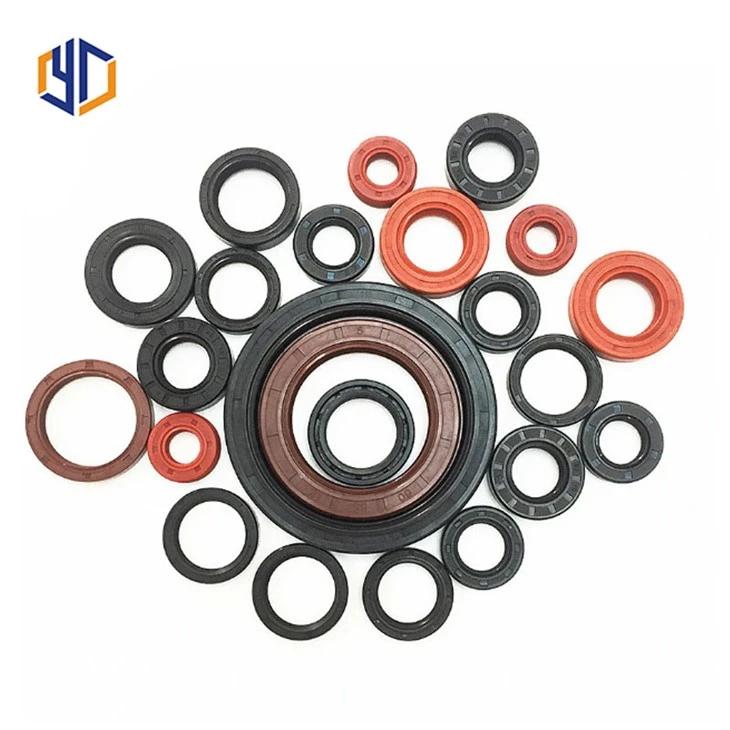
On the other hand, fluorocarbon rubber is known for its excellent chemical resistance and high - temperature performance. It also has much better UV resistance compared to nitrile rubber. So, if you're in an environment where there's a lot of sun exposure, a Spot TC Oil Seal made from fluorocarbon rubber would be a better choice.
But it's not just about the material. The design of the seal also plays a role in its UV resistance. Our engineers have designed Spot TC Oil Seals to minimize the amount of direct UV exposure. For example, some of our seals have a protective layer or a shape that shields the main sealing part from the sun. This helps to extend the life of the seal in UV - rich environments.
Another factor to consider is the application environment. If the seal is installed in a place where it's mostly shaded or protected from direct sunlight, the UV radiation won't have as much of an impact. For instance, if the seal is inside a piece of machinery that's covered or in a building, it'll be less exposed to UV rays.
However, if the seal is used in outdoor applications, like in agricultural equipment or marine vessels, it'll be exposed to more UV radiation. In these cases, we recommend taking some extra precautions. You can use a UV - resistant coating on the seal or install a cover to protect it from the sun.
Let's talk about some real - world examples. I've had customers who use our Spot TC Oil Seals in agricultural machinery. These machines are often out in the fields all day, exposed to the sun. They initially used seals made from nitrile rubber, and after a few months, they noticed some cracking on the seals. We recommended switching to seals made from fluorocarbon rubber, and the problem was solved. The new seals lasted much longer and didn't show any signs of UV - related degradation.
In the marine industry, our Spot TC Oil Seals are used in boats and ships. The saltwater environment combined with UV radiation can be really tough on materials. But by using the right materials and designs, our seals have been able to withstand these harsh conditions. Many boat owners have been happy with the performance of our seals, even after years of use in the open sea.
So, if you're thinking about using Spot TC Oil Seals in an environment with UV radiation, here's what you need to do. First, assess the level of UV exposure. If it's low, a nitrile - based seal might be sufficient. But if it's high, go for a fluorocarbon - based seal. You can find more information about our different seal materials and their properties in our TC Oil Seal Catalog.
Also, make sure to follow the installation and maintenance guidelines. Proper installation can ensure that the seal is protected as much as possible from the elements. And regular inspections can help you catch any signs of degradation early on.
If you have any specific questions about whether a Spot TC Oil Seal is suitable for your UV - exposed application, don't hesitate to reach out. We're here to help you choose the right seal for your needs. You can learn more about our Spot TC Oil Seal on our website.
In conclusion, Spot TC Oil Seals can be resistant to UV radiation, but it's important to choose the right material and take appropriate precautions. Whether you're in the automotive, agricultural, or marine industry, we have a solution for you. If you're interested in purchasing our Spot TC Oil Seals or have any questions about UV resistance or other product features, feel free to contact us for a procurement discussion. We're always ready to work with you to find the best sealing solution for your application.
References:
- "Elastomers and Their Applications" - A technical guide on elastomer materials and their uses.
- "Sealing Technology Handbook" - A comprehensive resource on sealing design and performance.
- Industry research reports on the effects of UV radiation on rubber materials.