

Hey there! As a supplier of automotive plastic clips, I've been getting a lot of questions lately about whether these little guys are affected by chemical substances. So, I thought I'd dive into this topic and share what I've learned.
First off, let's talk about what automotive plastic clips are used for. These clips are super important in the automotive industry. They're used to hold different parts of a vehicle together, like the Bumper Door Trim Panel Fastener Clip, which secures the bumper and door trim panels. There's also the Engine Cover Clip that keeps the engine cover in place, and the Auto Fir Tree Clip Bumper Fastener for fastening the bumper.

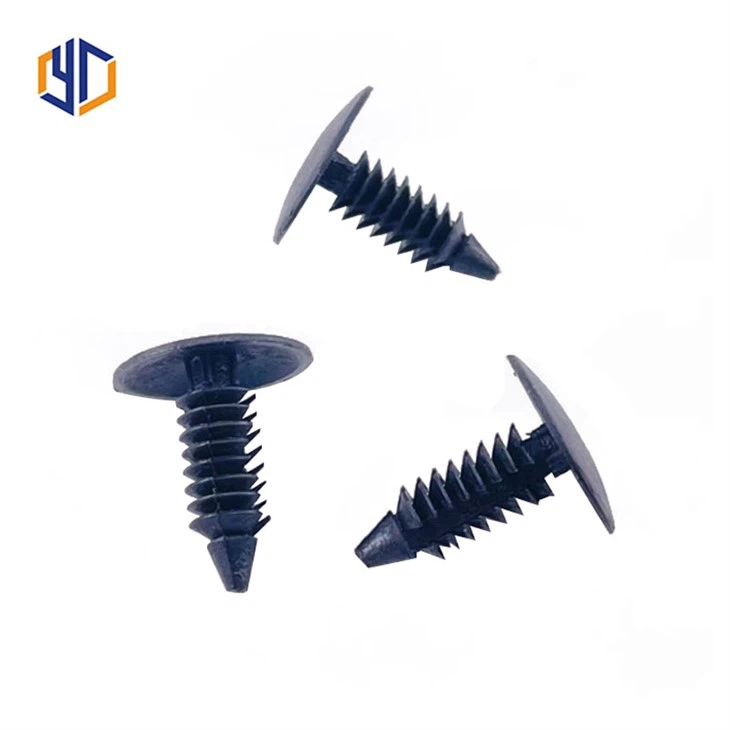
Now, when it comes to chemical substances, there are a bunch of them that a car's plastic clips might come across. In the engine compartment, there are oils, fuels, and coolant. Under the car, they can be exposed to road salts, especially in areas where they use a lot of salt on the roads during winter. And inside the car, there are cleaning agents and air fresheners.
Let's start with the engine-related chemicals. Motor oil is a common one. Most automotive plastic clips are made from materials like nylon, polypropylene, or acetal. These plastics are generally resistant to motor oil. Nylon, for example, has good chemical resistance and can withstand contact with oil for a long time without significant damage. However, if the oil is contaminated with other chemicals or if it's at a very high temperature for an extended period, it could start to break down the plastic over time.
Fuel is another story. Gasoline and diesel can have a more significant impact on plastic clips. Some plastics can absorb fuel, which can cause them to swell. When a clip swells, it might lose its grip, and that's a big problem because it could lead to parts coming loose. For instance, if an Engine Cover Clip loses its grip due to fuel exposure, the engine cover might rattle or even come off while the car is moving.
Coolant is usually a mixture of water and ethylene glycol. Most plastics used in automotive clips can handle coolant pretty well. But if there are additives in the coolant or if it's leaking and the clip is constantly submerged, it could cause some degradation. The coolant might break down the plastic's molecular structure, making it weaker and more prone to cracking.
Now, let's move to the outside of the car. Road salts are a major concern, especially in colder regions. Salt is used to melt ice on the roads, but it can be really harsh on plastic clips. Saltwater is corrosive, and it can cause stress cracking in some plastics. Polypropylene, which is a common material for many automotive clips, can be susceptible to stress cracking when exposed to saltwater. This is because the salt can create tiny cracks in the plastic's surface, and over time, these cracks can grow and cause the clip to fail.
Inside the car, cleaning agents and air fresheners might not seem like a big deal, but they can also affect plastic clips. Some cleaning agents are very strong and contain chemicals like ammonia or bleach. These can break down the plastic's surface and make it brittle. Air fresheners, especially those with strong solvents, can also have a negative impact. If a cleaning agent gets on a Bumper Door Trim Panel Fastener Clip during an interior cleaning, it could weaken the clip and cause it to break when you try to remove or reinstall the trim panel.
So, what can we do to protect these plastic clips from chemical damage? One option is to choose the right plastic material in the first place. Some manufacturers are now using plastics that are specifically formulated to be more resistant to chemicals. For example, there are nylon blends that have better fuel and oil resistance.
Another thing is proper design. Clips can be designed in a way that minimizes their exposure to chemicals. For instance, they can be placed in areas where they're less likely to come into contact with engine fluids or road salts.
Regular maintenance is also crucial. Checking the clips during routine car maintenance can help catch any signs of chemical damage early. If a clip shows signs of swelling, cracking, or loss of grip, it should be replaced right away.
As a supplier of automotive plastic clips, I know how important it is to provide high-quality products that can withstand chemical exposure. We test our clips in different chemical environments to make sure they meet the industry standards. We also keep up with the latest research on plastic materials to find the best ones for our clips.
If you're in the automotive industry and you're looking for reliable plastic clips, I'd love to talk to you. Whether you need Bumper Door Trim Panel Fastener Clip, Engine Cover Clip, or Auto Fir Tree Clip Bumper Fastener, we've got you covered. Just reach out, and we can discuss your specific needs and how our products can fit into your automotive applications.
In conclusion, automotive plastic clips can be affected by chemical substances, but with the right materials, design, and maintenance, we can minimize the risks. It's all about making sure these little parts do their job and keep the car running smoothly.
References
- "Handbook of Plastics, Elastomers, and Composites" by Charles A. Harper
- "Automotive Plastics and Composites" by Rajesh K. Gupta
- Various industry research papers on automotive plastic component durability